
Arrest Warrants in Middlesex County
Virginia Code sections 19.2-71 and 19.2-72 give a magistrate, judge, or authorized clerk the power to issue arrest process. First comes a sworn complaint. Then the issuer weighs it for probable cause. If it holds up, the warrant must name the accused or give a reliable description, state the offense, and direct an authorized officer to arrest the person and bring them before the proper court. The issuing officer signs it. Middlesex County provides 24-hour magistrate service for complaints, warrants, summonses, and bail, though that desk issues and releases process rather than running a public warrant lookup.
Middlesex County Arrest Warrant Review
Every warrant in Middlesex County starts with facts. Virginia demands a written complaint for felonies and for any complaint filed by someone outside law enforcement. The judicial officer questions the complainant or witnesses under oath, then decides whether probable cause supports process. Sometimes a summons fits instead, when appearance is expected. The local route can open with magistrate review, move to GDC for an adult felony preliminary hearing, and continue to Circuit Court after probable cause and indictment. Each court builds a different piece of the file. Virginia Code sections 19.2-71 and 19.2-72 spell out how process is issued, what it must contain, and where it is directed.
What a Middlesex County Arrest Warrant Contains
Virginia's official forms show what a Middlesex County warrant holds, even though a public case result is shorter than the paper or electronic record. Felony form DC-312 and misdemeanor forms DC-314 and DC-315 can capture the case, the offense, the issuing authority, defendant descriptors, execution, and hearing details. A sample format is never a real person's warrant.
| Case number | Public systems use court case formats such as CR12345678-90; not a warrant serial. |
|---|---|
| Accused / descriptors | Name and identifying details appear as authorized by the form and access rules. |
| Offense | Offense date, Code section, description, and felony class when relevant. |
| Issuing authority | Magistrate, judge, or authorized clerk, with the proper court named. |
| Execution / return | Arrest date, officer, agency, service date, and return may be entered. |
| Bail / hearing | Release condition and next court setting are case-specific; no local preset bond is published. |
Middlesex County 24-Hour Arrest Warrant Access
Middlesex County posts that magistrates work around the clock. They review complaints, issue arrest warrants and summonses, and handle bail or release proceedings. When no magistrate is physically present, video access runs at the Sheriff's Office. The magistrate stays neutral; Sheriff Records is the later route for execution and records. The Middlesex Magistrate Services page gives the county's own service description.
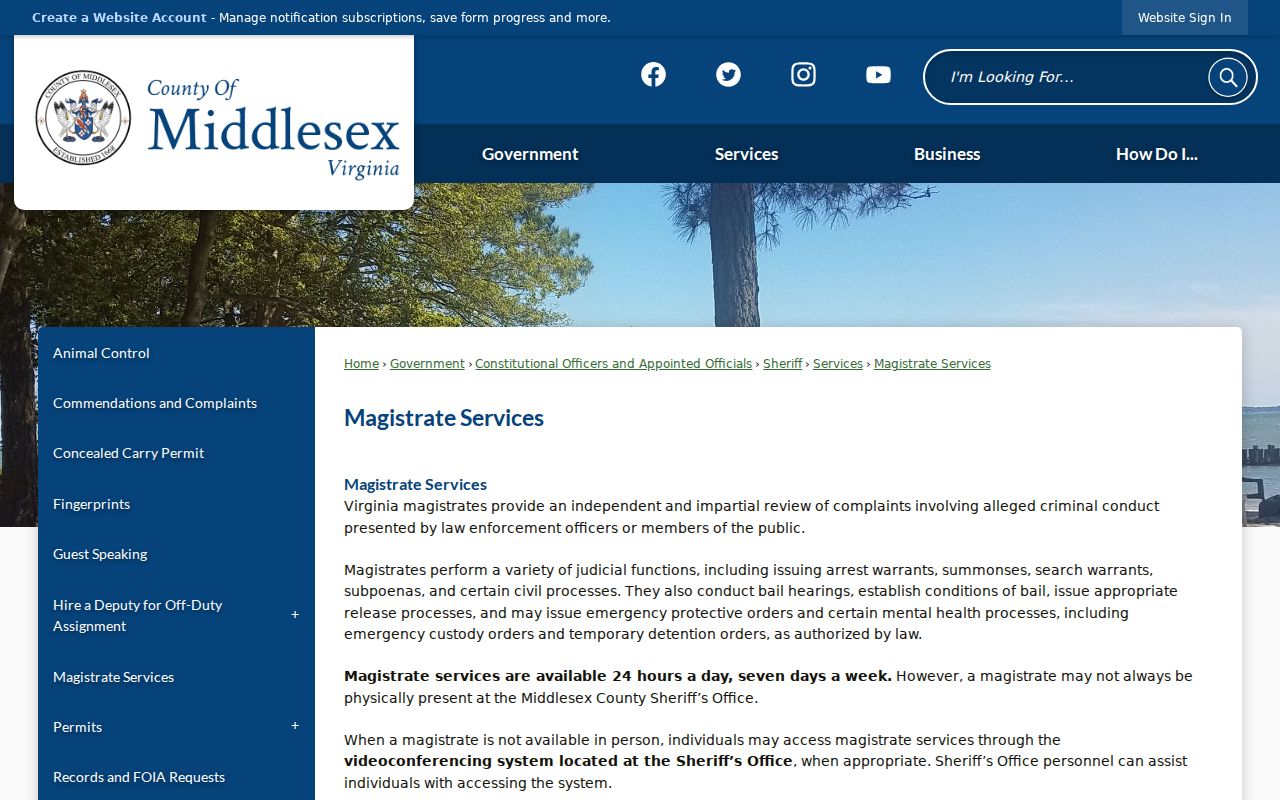
Video access brings a magistrate to Middlesex County when none is present in person; it is not a search portal.
How Arrest Warrants Are Served
The Sheriff or any officer named in the process may execute it. In Middlesex County, the Sheriff's Office is the main channel for service, courthouse security, transport, and record maintenance. Virginia law lets process be directed to authorized officers, and no town boundary creates a separate Urbanna warrant division. Once service happens, the officer returns process to the court. Sheriff Records may hold the execution detail, while the clerk keeps the court entry and the next date. An arrest sends the person to a magistrate for release conditions, and MPRSC may be the custody facility. Confirm the exact path for the case.
Middlesex County Arrest Warrant Form Fields
A warrant's form fields can cover the complaint, issuing signature, court, offense and Code section, defendant descriptors, officer and agency, execution date, return, and bail or hearing information. A public case line shows less. It will not display every sealed or law-enforcement entry. The Middlesex Circuit Court page is the local source for felony file routing and clerk contact.
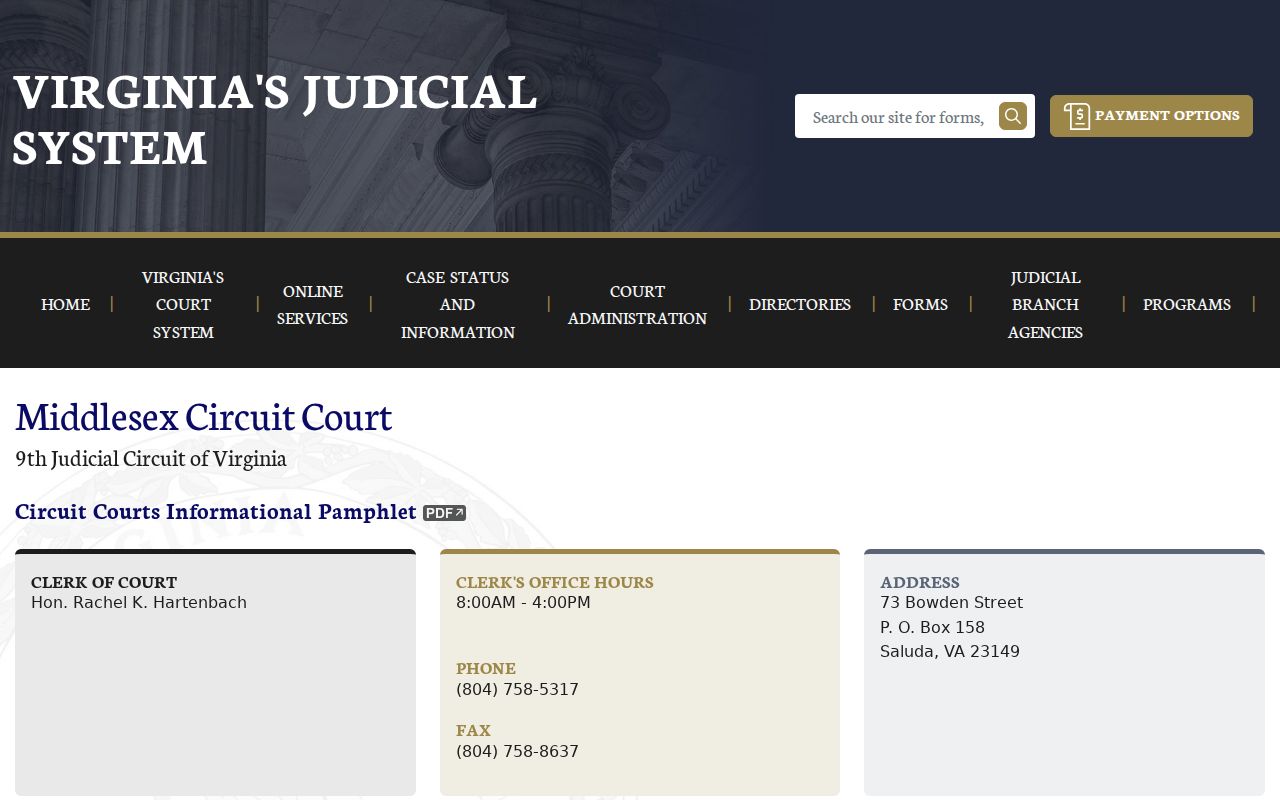
A Middlesex County felony file can move from GDC preliminary proceedings into the Circuit Court docket after indictment.
Arrest Warrant vs Summons vs Bench Warrant
An arrest warrant tells an officer to bring a person before a court. A summons orders appearance without that arrest command. Bench or capias process usually follows a missed obligation in a case already open. Read the exact papers, and ask the Middlesex County clerk which action applies. The separate bench warrant path turns on case history.
| Feature | Arrest Warrant | Summons | Bench Warrant |
|---|---|---|---|
| What it orders | Arrest and appearance before the proper court | Appear on the stated date | Arrest or answer for noncompliance |
| Basis | Probable cause after a complaint | Applicable case and appearance rule | Missed appearance, default, or other court duty |
| Who issues | Magistrate, judge, or authorized clerk | Authorized court or officer | Court with the pending case |
| How to respond | Confirm status and seek counsel | Appear as directed | Ask about recall, new date, or surrender |
Middlesex County Arrest Warrant Service Returns
A service entry can list an officer, badge, agency, arrest date, and return result. Those details may sit with the Sheriff or in the court file. If you see a case but cannot tell whether the warrant was served, ask the clerk for the court return. Ask Sheriff Records for execution information. The two entries answer different questions. Middlesex County systems may not show process from a federal or out-of-state jurisdiction, so for those matters ask counsel or the issuing court instead of treating a local search as complete.
What to Do If There Is a Warrant for You
Confirm the court, case number, and exact process first. Then act. Call GDC for an adult traffic or misdemeanor case, Circuit for an indicted felony, or Sheriff Records when a court directs a service or return question. Counsel can discuss a motion to recall unserved process, voluntary surrender, and bail review. No Middlesex County office posts a walk-in surrender window, a set bond amount, or one universal payment method, so ask before you go.
Important: Speak with counsel before appearing; a court or magistrate must decide recall, surrender conditions, and any bond.
Middlesex County Federal Warrant Route
Virginia OCIS stops at the state line. It says nothing about federal process, so a Middlesex County warrant search there will miss anything filed in federal court. For that, the federal dockets live in PACER, and CourtListener plus RECAP hold only a slice of the public filings. The U.S. Marshals Service Eastern District of Virginia page explains fugitive work and how to send tips. A tip line is not a status check. For a real answer on a federal case, call the federal clerk or get a lawyer. After a local arrest in Middlesex County, the magistrate sets release terms and the regional facility takes custody questions. Release does not end the charge or the next court date, so keep the order and confirm that setting with the issuing clerk.