
The Middlesex County Most Wanted Program
No official Middlesex County most-wanted roster or local Crime Stoppers warrant list was found in the county, Sheriff, or reviewed court sources. The Sheriff page identifies office functions and records contacts, but does not publish names or photos of wanted people. This means there is no verified local list to reproduce or link as a roster. It also does not mean that no warrants exist; ordinary court process is not necessarily publicized as a “most wanted” notice.
For a local question, use the Middlesex County Sheriff’s Office page to reach the agency and confirm the proper channel. The Sheriff’s office can direct a tip or records question, while the issuing court controls the case and warrant status. This page does not publish identities, photographs, or unverified social-media claims.
Middlesex County Sheriff Records Are Not a Roster
The Sheriff’s Records Section maintains law-enforcement records, including warrant-related material held by that office. Its public contact page gives a route for records questions; it does not provide a public name-by-name warrant roster. For a case-status question, ask which court issued the process and whether the clerk or Sheriff Records is the appropriate office. A records request may be subject to Virginia FOIA exemptions and is not guaranteed to disclose investigative material.
The Sheriff Records Section page describes the office and gives its phone routing.
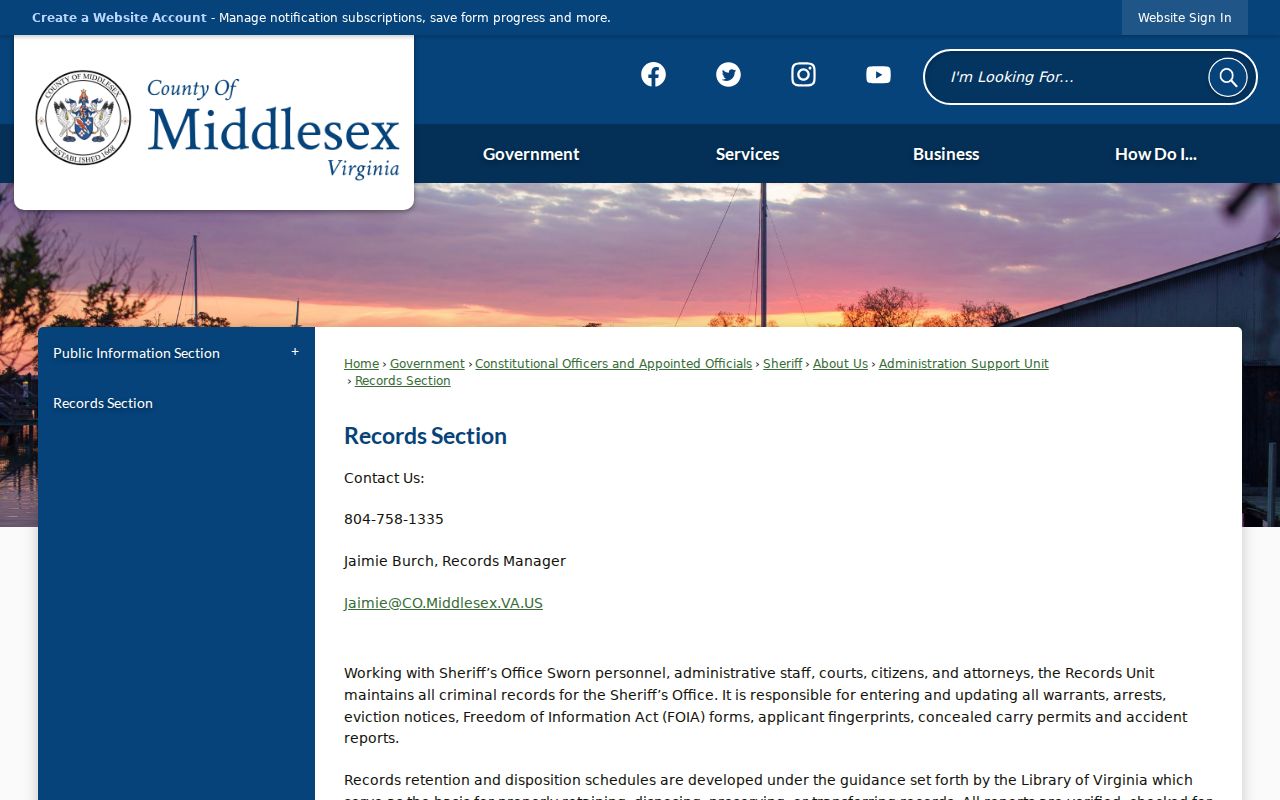
Contact the unit for records help; the page itself is not a current list of people with warrants.
Middlesex County Warrant Roundups and Updates
The reviewed research found no Middlesex warrant-roundup announcement, amnesty event, local “most wanted” update cadence, or public roster maintained by the Sheriff. Without an official published program, there are no local inclusion or removal rules to describe and no safe basis for guessing that a particular person appears on a list. An arrest, surrender, dismissal, recall, or service return is recorded through the relevant law-enforcement and court channels, not by removing a name from this reference page.
How to read the absence: No roster was located in the sources reviewed. That finding is not evidence that every warrant status is clear, and it is not a substitute for asking the issuing clerk or Sheriff Records.
Middlesex County Has No Published Roundup Calendar
The county sources reviewed for this page do not announce a warrant roundup, amnesty period, or surrender event. No published start date, eligibility rule, fine discount, or safe walk-in procedure was found. Do not assume a general court date, payment plan, or Sheriff office visit is an amnesty program. If a court notice or warrant is at issue, ask the issuing clerk or an attorney about the actual case and available procedure.
Local balances and payment policies differ by court. A Circuit Court policy does not automatically govern a General District Court matter, and paying fines is not the same as posting bond or obtaining a recall order. Get the terms in writing from the court handling the case.
How to Report a Middlesex County Tip Safely
For a non-emergency crime tip or information that may help law enforcement, the Middlesex Sheriff lists a tip line at 804-758-5600. The county materials do not describe this as an anonymous Crime Stoppers service and do not promise a reward, tip number, or confidentiality terms. If anonymity matters, ask the agency what protections apply before sharing identifying details. For an emergency or immediate danger, call 911 instead of using a tip line.
- Use the Sheriff’s listed tip contact for non-emergency information, or 911 when a person may be in immediate danger.
- Describe what you observed, where and when it occurred, and whether the concern is ongoing.
- Do not approach, follow, or try to detain anyone; let law enforcement assess and respond.
- Ask the receiving agency how to provide additional information and whether any confidentiality rules apply.
Key Point: The Sheriff’s tip number is for information, not a warrant-status lookup; never confront someone or rely on an online post to decide that a person is wanted.
Middlesex County Reporting Is Not Anonymous Warrant Search
The Sheriff distinguishes a non-emergency reporting number from its tip line. The reporting page directs non-emergency calls to 804-758-2779 and lists 804-758-5600 for tips. Neither number is described as a public warrant-status line. The county materials reviewed do not promise that a tip is anonymous or rewards are available; ask the agency before sharing sensitive information. If a situation needs immediate police, fire, or medical response, use 911.
The official Sheriff records page provides the agency contact route. For a court case, contact the issuing clerk rather than calling the tip line.
Middlesex County Most Wanted vs. an Active Warrant
A publicized most-wanted roster, when an agency maintains one, is a communications tool; an active warrant is court process whose status must be confirmed through the issuing court and law-enforcement records. Middlesex County sources reviewed here did not reveal a local public roster. The distinction still matters: a court case search is not a wanted list, a tip call is not a warrant search, and absence from a web page does not confirm there is no order.
| Feature | Most Wanted List | Active Warrant |
|---|---|---|
| What it means | Publicity program, if an agency publishes one | Court process with a current status to verify |
| Middlesex source found | No official local roster located | Court clerk and Sheriff Records routes |
| Public visibility | Depends on the agency’s publication choice | Selected case data may be public; some records are restricted |
| How to resolve | Confirm through counsel and the issuing authority | Follow the issuing court’s instructions and confirm its order |
Middlesex County Court Search and Federal Fugitive Notices
Virginia’s online case tools are organized around court cases. They do not provide a county most-wanted feed, and a case listing may not answer whether an arrest warrant is currently active. A federal fugitive matter is different again: it is handled by federal authorities and the federal court system, not by a Middlesex municipal roster. Do not treat a federal notice as a local county status record.
The Eastern District of Virginia court locations page identifies federal court sites; it does not list county warrants.
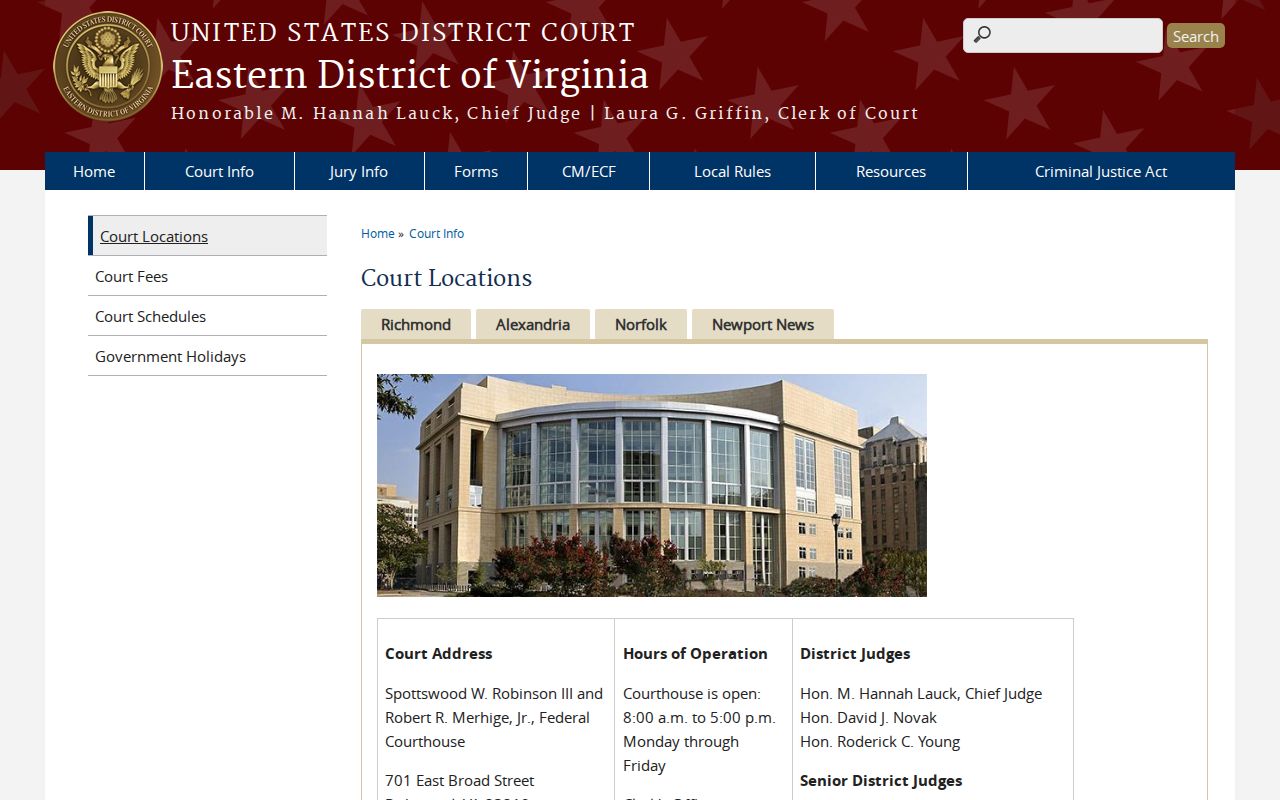
For federal case filings, PACER is a separate service with its own fee rules; it is not a local Sheriff search.
The PACER pricing page explains the federal docket service charges.
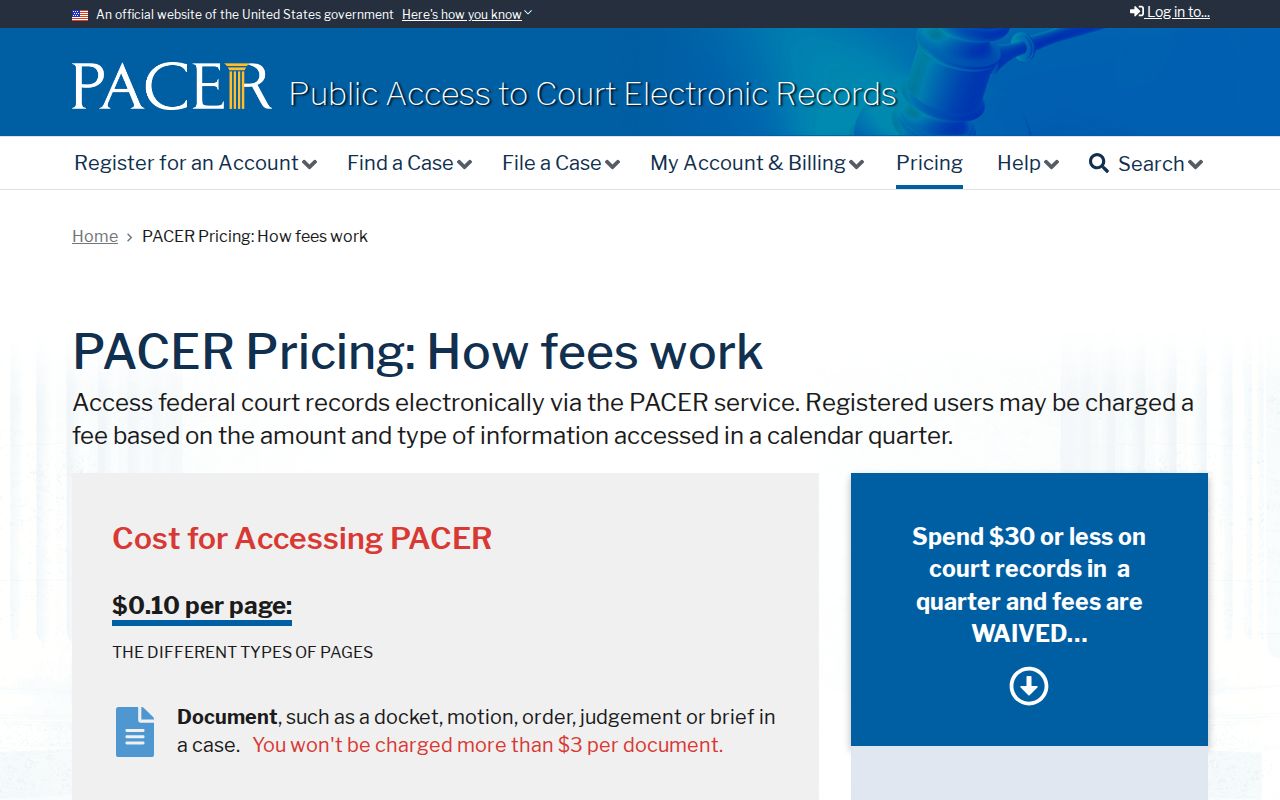
Use federal resources only when the underlying matter is federal; they cannot confirm a Virginia state warrant.
If You Believe a Middlesex County Warrant Exists
If you think a local warrant may exist, identify the court and ask its clerk how to confirm the case and any current process. The Middlesex GDC clerk handles adult traffic, misdemeanor, and ordinance matters; Circuit Court handles felony matters and other cases within its jurisdiction, while J&DR records have additional privacy limits. The Sheriff Records Section can answer questions about its records and service returns but cannot replace an order from the issuing court. Consider speaking with a Virginia attorney before deciding how to appear.
Important: Do not assume a web search resolves the question; get current guidance from counsel, the issuing clerk, or Sheriff Records.
Middlesex County Most Wanted Safety and Verification
Online posts, copied photos, and old wanted notices can remain searchable after circumstances change. Before acting on information, verify that it came from an official agency, check the publication date, and call the agency through a number found on its own website. Never use a personal profile, private message, or third-party directory as proof of a current warrant. If the question concerns your own case, speak with counsel and the issuing court instead of trying to contact or locate another person.
If you have a tip, give it to law enforcement and step away. The public role is to report useful information, not to investigate, follow, or confront anyone. The agency decides whether a report relates to an active investigation or court process.